Talk the Technicals
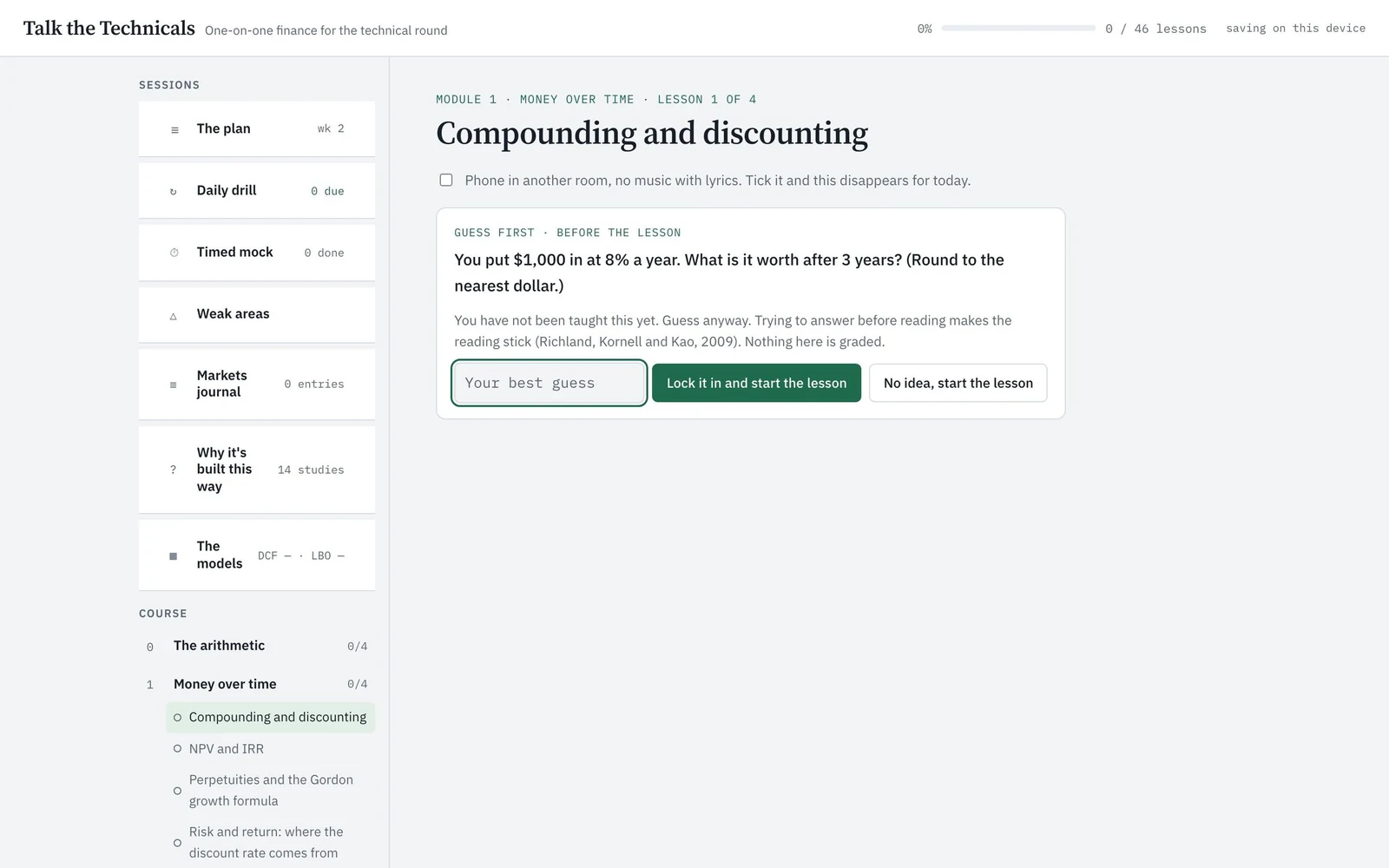
I wanted to be able to talk through valuation and accounting out loud by December 1, 2026. So I built the course I needed, one-on-one, question first and explanation second.
- Role
- Built for my own study, with AI coding tools
- When
- September 2026 to now
- Scope
- Ten modules, 46 lessons
- Access
- Private
46 lessons10 modulesDec 1, 2026 deadline
In short
- The question
- Could I explain a DCF to an interviewer, out loud and without notes, by December 1?
- My part
- I designed it around how I learn and built it with AI coding tools. I am also its only student.
- The decision that mattered
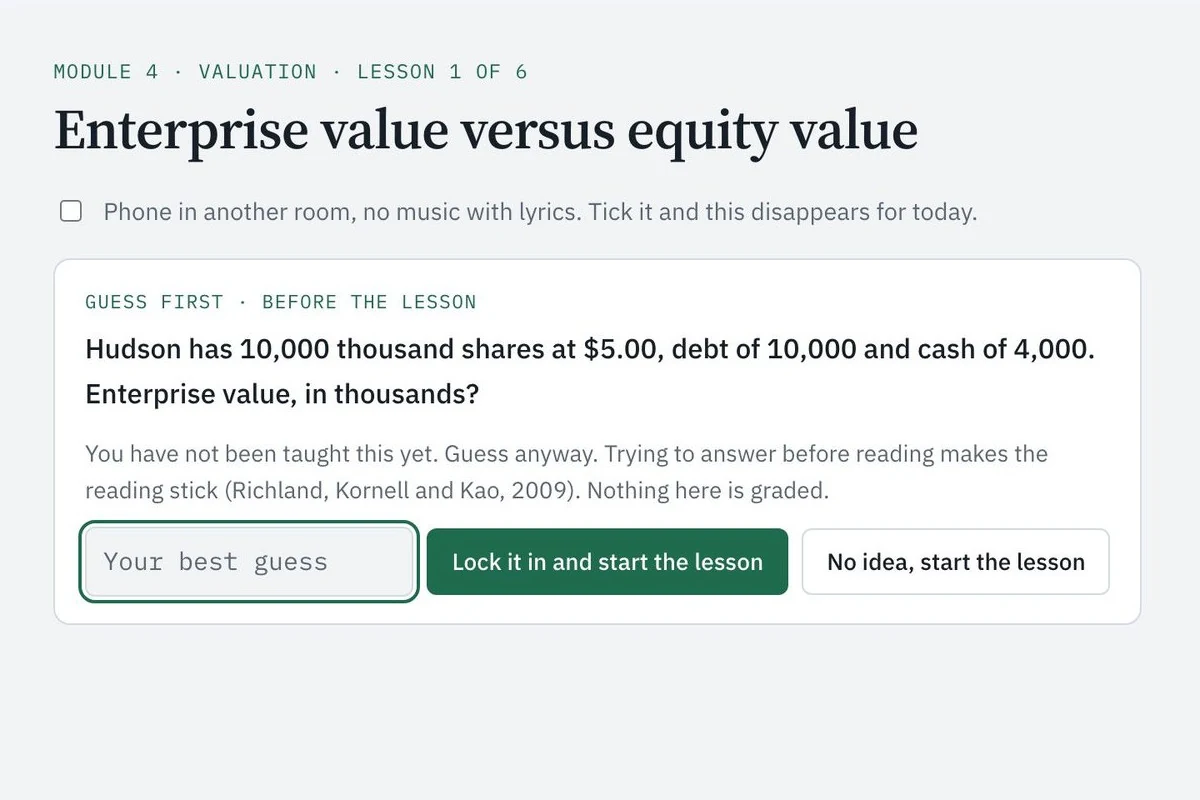
- Guess first. Every lesson opens with a question I have not been taught yet, and nothing at that step is graded.
- What I made
- Ten modules and 46 lessons, a daily drill that brings missed cards back until they are right, written answers graded against a model answer, and a timed mock.
- What came of it
- A LinkedIn post about the twelve-week plan behind it reached 50,372 impressions, 99 percent of them outside my network. The real result comes on December 1.
46
Lessons, from arithmetic to a full modeling track
Ten modules
2 hrs
A day, in four thirty-minute slots
Yesterday’s material first
50,372
Impressions on the post about the plan
LinkedIn analytics, September 2026
Dec 1
The date I set to be fluent
2026
Why
Reading about a DCF is not the same as explaining one to an interviewer. I set a date, December 1, and built a course around saying the answers.
Guess first
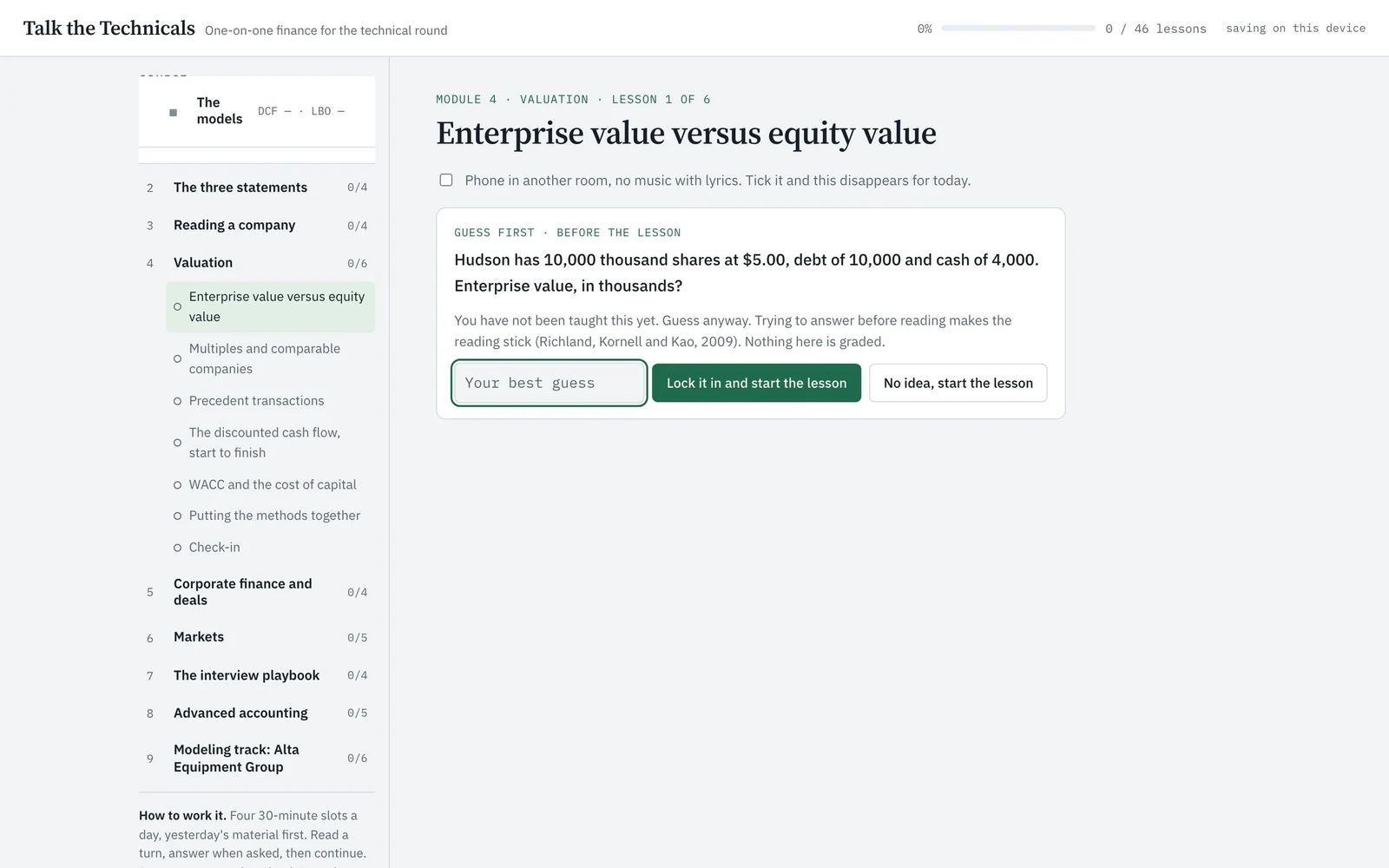
Every lesson opens with a question I have not been taught yet. Trying to answer before reading makes the reading stick, and nothing at that step is graded.
Then practice
Lessons reveal one step at a time, with numeric, multiple choice and say-it-out-loud problems. A daily drill brings missed cards back until they are right, and a timed mock runs the question bank cold.
One company throughout
The examples follow one made-up forklift company, Hudson Lift Co., so the same numbers carry from the income statement through to the DCF.